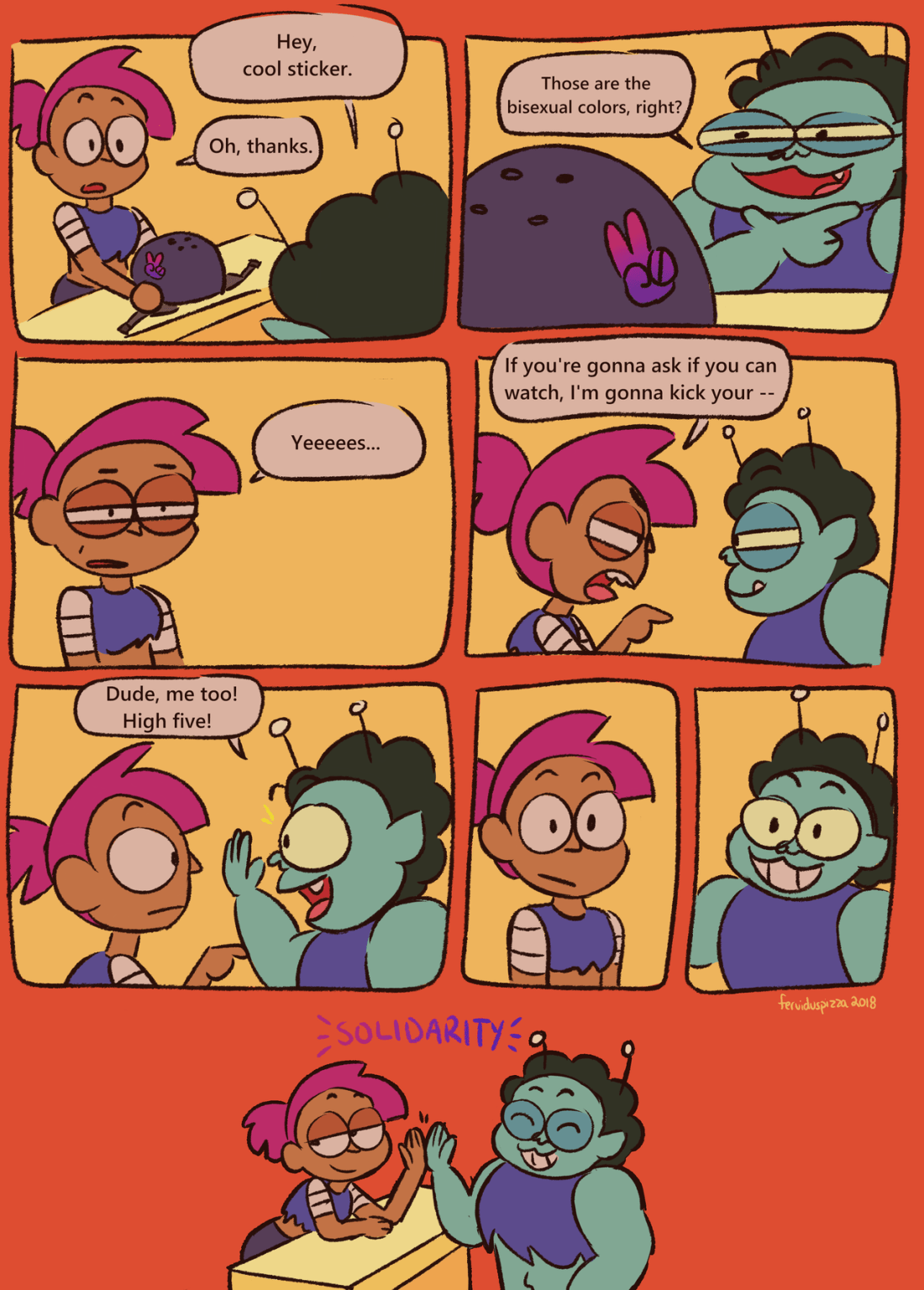
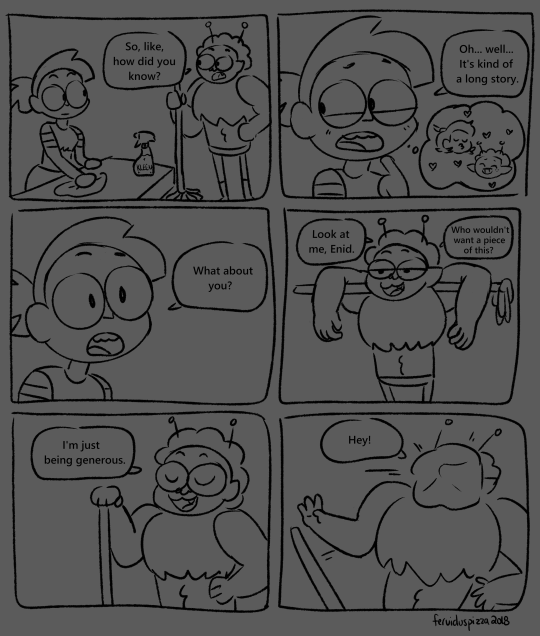
This is like. Really in-character interactions, though. You know when something is so in-character that you can hear the the dialogue in the characters’ voices? That’s what this is
I was in 1st/2nd grade grade when the big Pokémon boom of the late 90s-early 00s happened. It was HUGE. Every kid was into it and we’d watch the show and play pretend and collect the cards and bring our game boys to school to trade Pokémon during recess. I was lucky to have supportive parents, but I remember how teachers and other adults would scoff and say how tired they were of Pokémon, how annoying and juvenile it was and how they couldn’t wait for us to “get over it already”. I might have been young, but I still remember how much these kinds of comments bummed me out. Why in the world are we being mean to little kids who like Fortnite
Why are you comparing pokemon to fortnite???
Because… Fortnite is very popular amongst children at the moment? And there are adults who dismiss it in the same way other adults did when Pokémon was big, calling it stupid, saying the dances are annoying, how much they can’t wait for the “fad to be over”, etc. It’s pretty much the same scenario.
Fortnite has a lootbox system that is glorified gambling, and can cause patterns of addiction in even adult minds, and that is in fact its intended goal in order for the game to make money from microtransactions. That’s how all games with lootboxes function. That’s how they draw in their customer base and squeeze more money out of them.
Like, I don’t judge kids who enjoy Fortnite. My little cousin plays Fortnite.
But last week, my little cousin also stole his mother’s credit card and spent about a month’s salary on microtransactions without his parents’ knowledge.
Modern gaming has become vile and predatory in ways that we didn’t have to deal with as children.
And we shouldn’t be mean to children about this, but we should definitely be coming down on these companies like a pile of fucking bricks.
How do you write healthy parent-child relationships?
this might be more response than you want, but interesting (and kinda depressing when you think about it) fact: there’ve been a bunch of research studies where parents have been asked what they think makes a healthy parent-child relationship, and they tend to like…not answer the actual question because they think they’re being asked what good parenting is, which is not the same. so they talk about things like helping kids with homework and making sure they eat well. children, on the other hand, usually respond to the same question with stuff that’s literally just the definition of healthy relationships generally. affection, honesty, respect, spending time together, sharing interests. and the real kicker is, objectively, we know that’s the kind of stuff that actually has a much better impact not only on whether or not the relationship is strong and positive but also the kid’s overall happiness and psychological health.
so, if you want to write a character who’s really intent on being a Good Parent you’d have them putting massive effort into making their kid Grow Up Right, worrying about shit like if they have The Right Friends and they’re spending Enough Time Outside. but if you want to write a good relationship, just make parent and kid laugh together and respect boundaries and be emotionally supportive, like you would when writing a solid pair of friends or romantic couple.
No that was actually really helpful and I’m glad you took the time to give a serious response
Making your angst hurt:the power of lighthearted scenes.
I’m incredibly disappointed with the trend in stories (especially ‘edgy’ YA novels) to bombard the reader with traumatic situations, angry characters, and relationship drama without ever first giving them a reason to root for a better future. As a reader…
I might care that the main siblings are fighting if they had first been shown to have at least one happy, healthy conversation.
I might cry and rage with the protagonist if I knew they actually had the capacity to laugh and smile and be happy.
I might be hit by heavy and dark situations if there was some notion that it was possible for this world to have light and hope and joy to begin with.
Writers seem to forget that their reader’s eyes adjust to the dark. If you want to give your reader a truly bleak situation in a continually dim setting, you have to put them in pitch blackness. But if you just shine a light first, the sudden change makes the contrast appear substantial.
Show your readers what light means to your character before taking it away. Let the reader bond with the characters in their happy moments before (and in between) tearing them apart. Give readers a future to root for by putting sparks of that future into the past and the present. Make your character’s tears and anger mean something.
Not only will this give your dark and emotional scenes more impact, but it says something that we as humans desperately, desperately need to hear.
Books with light amidst the darkness tell us that while things are hard and hurt, that we’re still allowed to breathe and hope and live and even laugh within the darkness.
We as humans need to hear this more often, because acting it out is the only way we stop from suffocating long enough to make a difference.
So write angst, and darkness, and gritty, painful stories, full of treacherous morally grey characters if you want to. But don’t forget to turn the light on occasionally.