Making your angst hurt:the power of lighthearted scenes.
I’m incredibly disappointed with the trend in stories (especially ‘edgy’ YA novels) to bombard the reader with traumatic situations, angry characters, and relationship drama without ever first giving them a reason to root for a better future. As a reader…
I might care that the main siblings are fighting if they had first been shown to have at least one happy, healthy conversation.
I might cry and rage with the protagonist if I knew they actually had the capacity to laugh and smile and be happy.
I might be hit by heavy and dark situations if there was some notion that it was possible for this world to have light and hope and joy to begin with.
Writers seem to forget that their reader’s eyes adjust to the dark. If you want to give your reader a truly bleak situation in a continually dim setting, you have to put them in pitch blackness. But if you just shine a light first, the sudden change makes the contrast appear substantial.
Show your readers what light means to your character before taking it away. Let the reader bond with the characters in their happy moments before (and in between) tearing them apart. Give readers a future to root for by putting sparks of that future into the past and the present. Make your character’s tears and anger mean something.
Not only will this give your dark and emotional scenes more impact, but it says something that we as humans desperately, desperately need to hear.
Books with light amidst the darkness tell us that while things are hard and hurt, that we’re still allowed to breathe and hope and live and even laugh within the darkness.
We as humans need to hear this more often, because acting it out is the only way we stop from suffocating long enough to make a difference.
So write angst, and darkness, and gritty, painful stories, full of treacherous morally grey characters if you want to. But don’t forget to turn the light on occasionally.
Drawing basic facial expressions is not the hardest. Most people can draw a sad face, a happy face, angry etc., but making more multidimensional expressions is more of a challenge. I have gotten a lot of compliments on how I draw facial expressions, (specifically “angsty ones”) telling me that they are very dramatic and well… expressive! And there are actually only a few things I think about when I draw faces that take them to the next level, so I thought i’d illustrate them all here!
SUPER IMPORTANT TIP BEFORE WE START: Look at your own face when you draw faces. Even making the face when you are drawing (you don’t even have to look at it), will give you some sense of how the face muscles pull and where things fold and stretch, because you can feel it. You are the best reference when it comes to facial expressions!
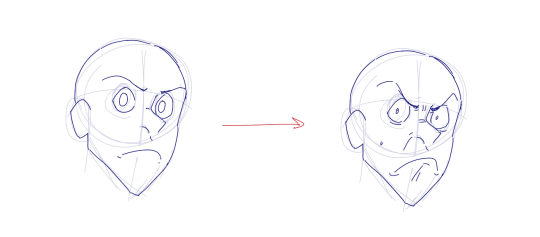
Angles
Draw the head in an angle that matches the expressions you want to make. It is not a requirement, but is going to add to the effect.
Symmetry vs asymmetry
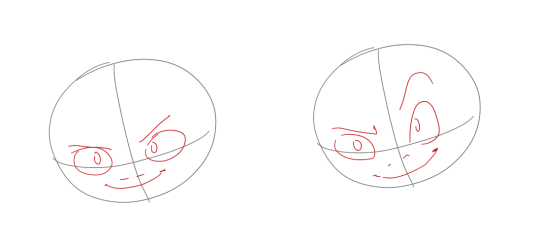
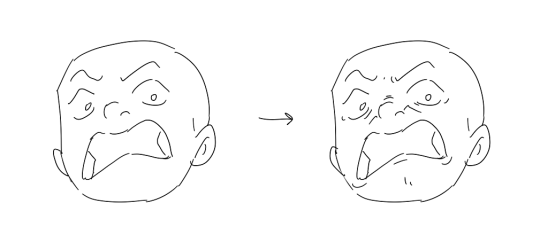
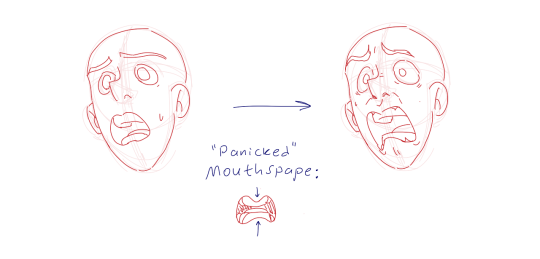
A face is rarely symmetric. Unless the face the character is making is 100 % relaxed or even dissociating, the eyebrows, mouth and facial muscles will have different placements of their respective side. This image shows the dramatic impact asymmetry has on a face:
That’s the difference between a smile and a smirk!
The first one’s like “oh yeah?” and the second is like “oH YEAH??”
The “balloon squishing principle”
This is something I did subconsciously, and I didn’t know about until I made this tutorial. And this principle goes hand in hand with an asymmetric face. Basically, if you squish one part of the face, you need to even out the empty space by “inflating” the other part of the face so that it doesn’t appear shrunken. The picture hopefully explains it:
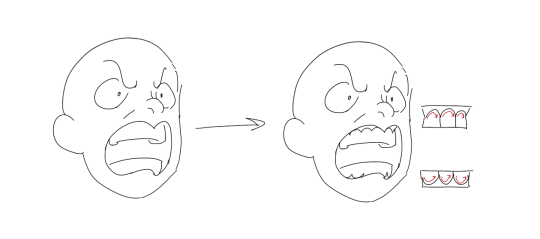
Teeth
Don’t forget to add the gum when the mouth is open to its full potential!
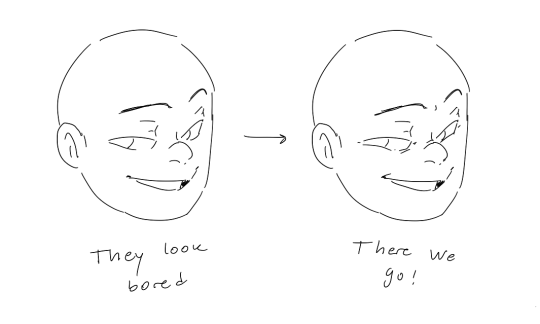
Squinting and folding
Adding folds around the eyes when a character is squinting makes a HUGE difference. It makes a smile more genuine and a growl more intimidating. Adding folds to the face in general makes your characters more lifelike and ‘visually relatable’. Like, they look human, and less plastic or fake.
and so on..
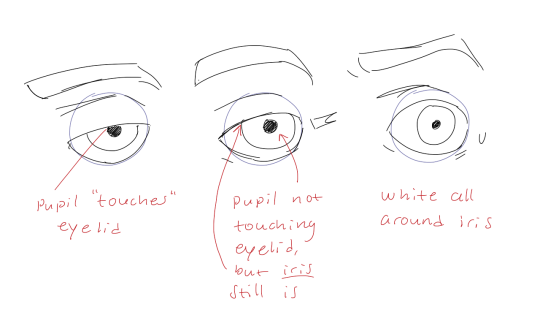
Pupils and irises
The placement of the iris and pupil in relation to the eyelids is very important! The less of the white you see, the more relaxed the character is.
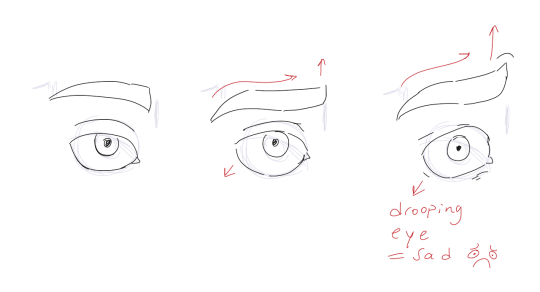
And then of course eyebrows and eyes go hand in hand!
Gestures, spitting, sweating…
Adding more elements than just a face is key to making the character actually look like they are feeling what you want them to feel. Just the tiniest sweat drop adds to their anxiety, spitting adds frustration to their rage, slouching shoulders, waving hands, a double chin, extreme angles, the list goes on! Add whatever and see what kind of impact it makes! Does it do the trick? Great! Add it!
Over exaggeration!!
Remember that you can almost always exaggerate more. Don’t be afraid to do draw “too much” because you’re just experimenting. See what works and what doesn’t. What do you like to exaggerate?
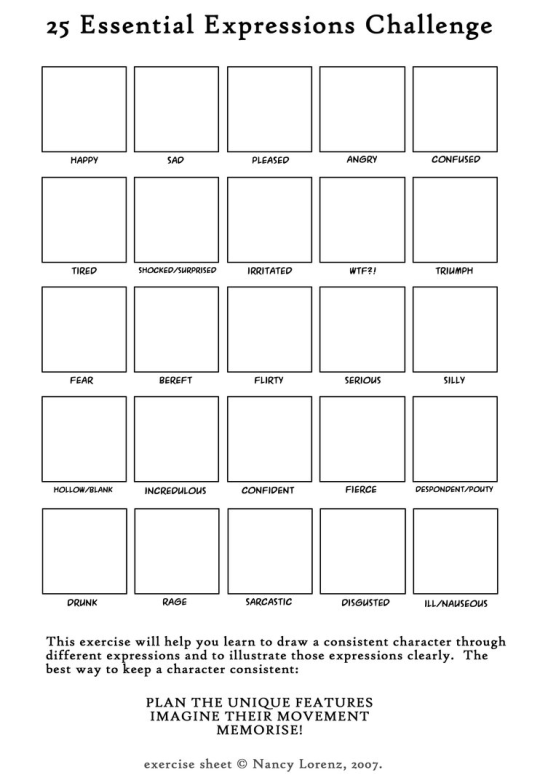
Now that you know some theory, it’s time to practice!
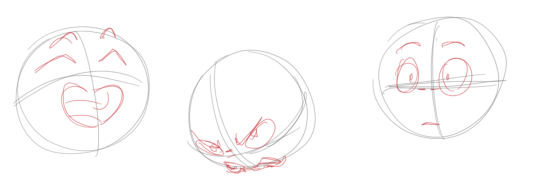
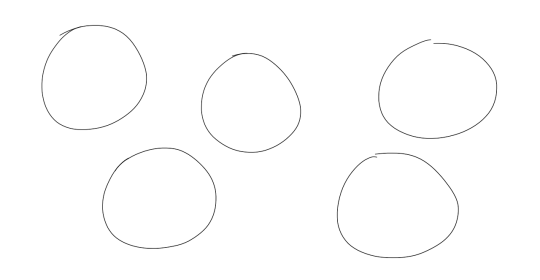
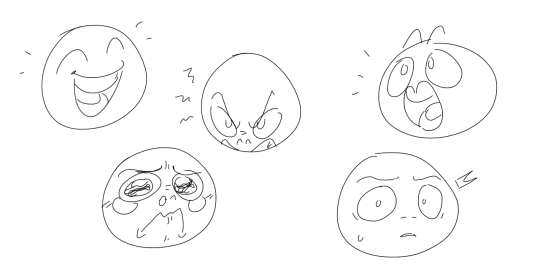
Fill a page with circles and fill them in with different expressions. Try and exaggerate as much as you can!
This is mostly for experimenting. They are quicker to draw than complete faces, but the same rules should apply!
And that’s about it!
I don’t know if I covered everything in this tutorial, since some things might be obvious for me, and this post perhaps only scratches the surface. So feel free to send me a message if you want an explanation about something more in depth! Thank you for reading! And now DRAW!!! ✨🎨
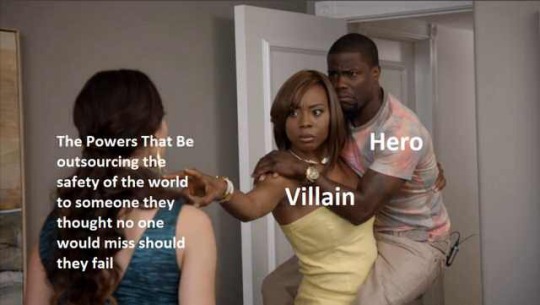
“Shh, it’s alright,” the villain said. “You’re doing beautifully and I’m so proud of you. But that’s enough now. It was cruel of them to make you fight me – you could never have won. It’s not your fault.”
The ancient and powerful villain may have had a calm and gentle face as he spoke, but he was furious, not at the hero, but the gods for continually sending kids and teenagers to fight their battles.
One of the saddest things about being a creative type in the modern world is that nobody seems to care about your work unless you have absurd amounts of money, or you get really lucky. It’s discouraging to spend hours or weeks on an original piece of art or a brand new story, only to have your work get minimal online attention. It’s feels like you have to piggyback off of other already famous creative works to get noticed, whether it be through drawing fanart or writing fanfiction. Unless you already have a sizable online following, it’s difficult to get people to care about your hard work, and it’s very frustrating. That’s why it means a lot to us when people take interest in our passion projects, or even just give us a little positivity and encouragement. That being said:
Great ways to show your creatively-inclined friends that you care! 💕
If your friend has any ocs, ask about them! Discussing the character’s design, personality and backstory can help both writers and artists to flesh out their ocs, and it helps to provide inspiration to hear other people’s ideas and opinions.
If your friend is working on an outline for a novel, play, or other piece of creative writing, ask if you can be a beta reader for their manuscript! Beta readers provide valuable feedback and information for writer’s creative projects, and can help point out any mistakes and inconsistencies.
If your friend writes poetry or song lyrics, ask if you can look over what they’ve written! Tell them how it makes you feel, and you can even provide analysis or criticism if you’re knowledgeable on the subject they’re writing about.
If your friend is a photographer, ask them if they’d be interested in photographing you or someone you know (if they do photography with human subjects) and recommend scenic locations to them! Give them your opinion on their work, even if you don’t quite understand it.
If your friend is interested in film, ask if they need any extras in any upcoming projects, or if they need any assistance while they shoot. Being a background character at a film shoot can be a lot of fun, and it’s a very interesting experience for people who wouldn’t usually be in front of a camera.
If your friend prefers three dimensional art, ask if you can watch them work! I personally have a very minimal understanding of ceramics, sculpting and pottery, but I find it fascinating to watch 3-D artists work their magic.
If they don’t mind taking requests, ask them to make you something! Some artists don’t like doing work for other people, and some can’t afford to do make you something at no expense, but some artists, myself included, love making art for other people. It means a lot to me that people are interested in my work to such an extent that they want something individualized, just for them.
If your friend doesn’t take requests and only takes commissions, you can pay them to make you some art instead! Or if you can’t afford it, you can always promo them and recommend their work to your other friends.
Artists need all of the love and support we can get, and even the slightest bit of appreciation goes a long way. If you’re willing to consider your creative friends’ feelings and acknowledge their work, they’ll be beyond grateful. You might even find an interest in their work and be inspired to create something of your own, and I think that’s a beautiful thing. Nothing makes the world a better place like more art! Creativity is wonderful, and it should always be valued by everyone.
go write three sentences on your current writing project.
# my favourite part about this post # is that nowhere does it say to reblog this # but we’re all reblogging it # because if we have to suffer # so do other writers
F u c k
Because of this I stopped procrastinating and got 1000 words out on my WIP!!
download these two then setup paint studio right click one of the icons after its done and click “file location” copy the crack files into the main paint studio file then click on the crack.exe till it says ok open paint studio
I literally only have one rule in my writing and it is this:
No matter what I put my characters through, they make it. They get to make it to the end of the story and have everything work out and be ok.
Because that’s the story I need. So it’s the kind I write.
If you want a piece of writing advice: write a story that is what you needed to hear at whatever age your target demographic is. I can guarantee you there’ll be someone out there who needs to hear it as much as you did. And maybe you’ll help them the same way someone else’s story did for you.
For some reason, this hit home and I never realized it that I did this for my stories too



 beinggayonmain